

Shark AV2501AE vs Roomba 105 Vac: Two Self-Emptying Robots, Two Weights
Two self-emptying robots in the same price band, listed at weights 2.5 times apart and filtration claims that cannot be set side by side. The Roomba states the longer runtime; the Shark the stronger filter.
The two listings at a glance
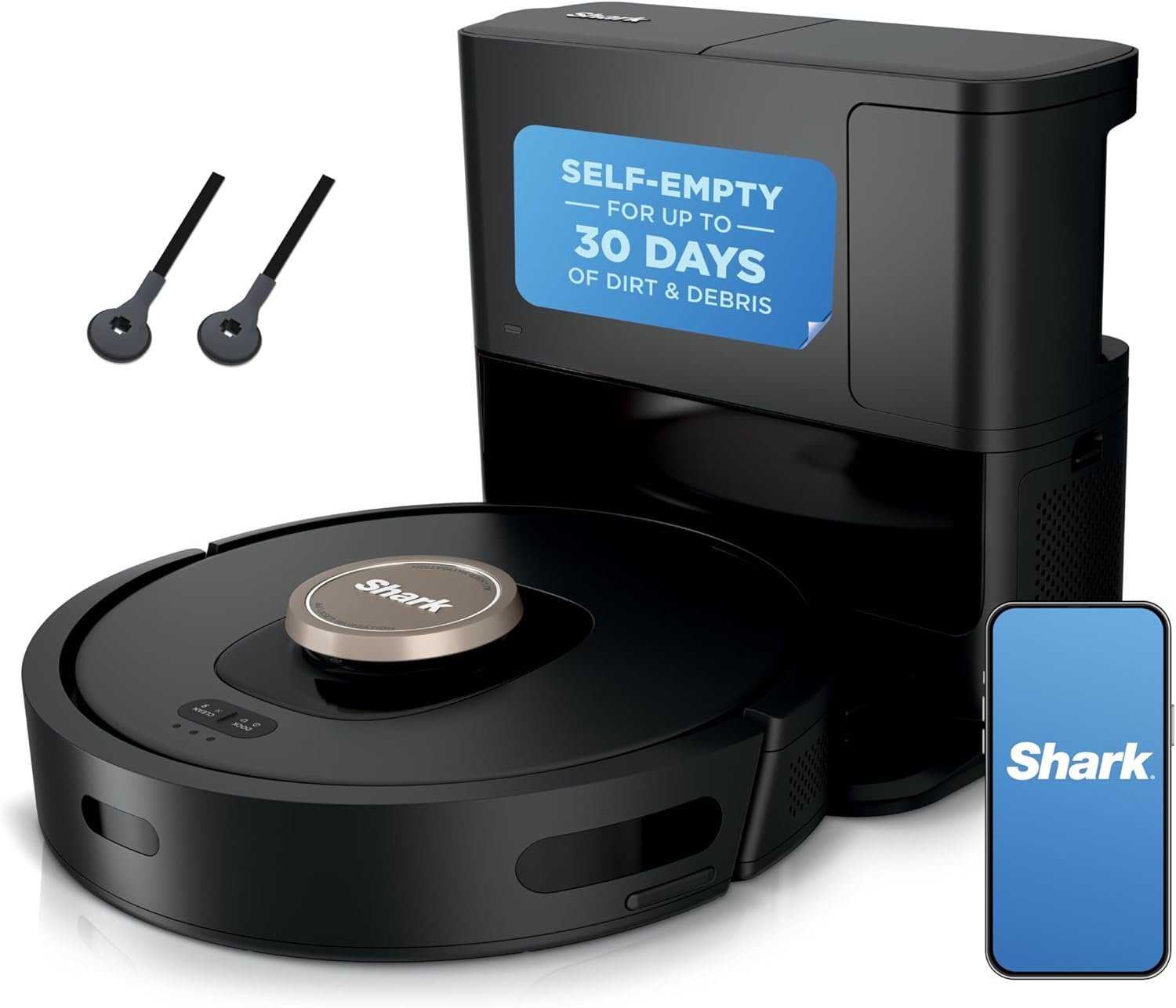
Robot vacuum, bagless self-empty base, HEPA
Read our review · Check price on Amazon
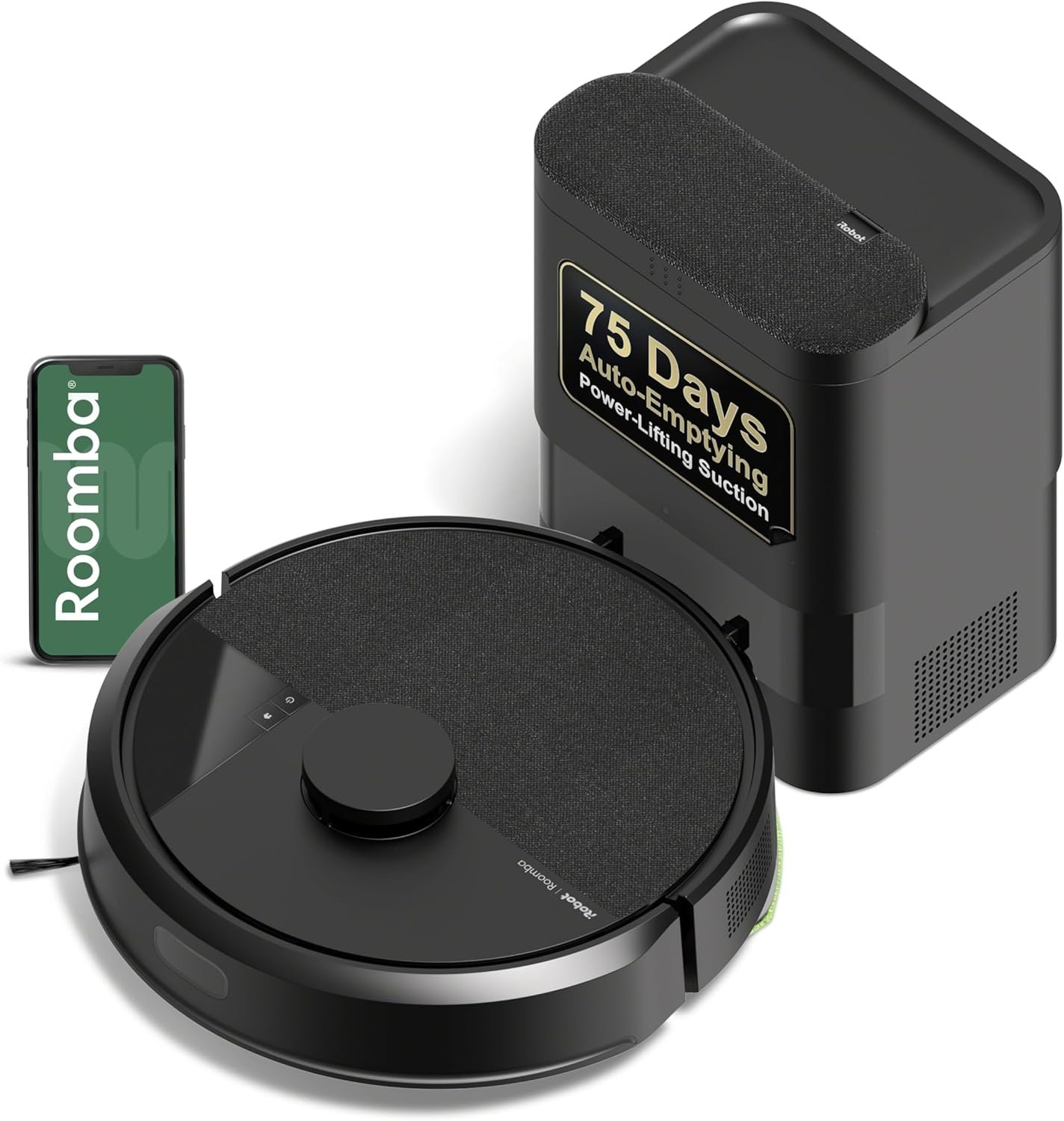
Robot vacuum, AutoEmpty dock
Read our review · Check price on Amazon
Two robots from two of the most familiar names in the class, in the same price band, each with a base that empties it. They are also listed at weights that differ by a factor of 2.5, and the explanation is not in either listing. Both weights are agreed by our review table and Amazon’s page, which is more than the eufy and roborock pair can say for both of its robots. The rest is mostly one-source.
| Figure | Shark AV2501AE | Roomba 105 Vac | Robot class median |
|---|---|---|---|
| Weight | 6.9 kg, 15.3 lb (both sources) | 2.8 kg, 6.2 lb (both sources) | 4.8 kg |
| Runtime | 120 min (listing only) | 200 min (listing only) | 120 min |
| Dock emptying | bagless base, up to 60 days | bagged dock, up to 75 days | — |
| Filtration claim | true HEPA, 99.97% | bag traps 99% of allergens as small as 0.7 microns | 3 robots state HEPA |
| Navigation | LiDAR, matrix grid | ClearView LiDAR | — |
| Robot dust bin | not stated as a volume | 378.5 mL | — |
| Filter type (Amazon) | HEPA | Cartridge | — |
| Price band | $200-500 | $200-500 | — |
Two and a half times the weight
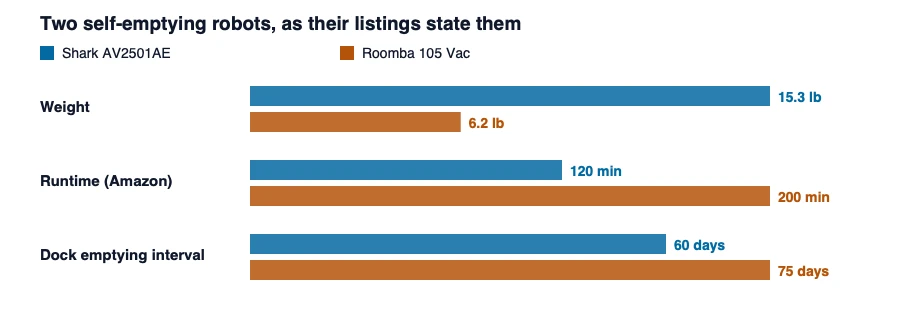
The Shark is listed at 15.3 pounds and the Roomba at 6.2. Our review tables and Amazon’s pages give the same figure for each, so the numbers are not in dispute. What is in question is what each figure covers. A listed weight can mean the robot alone or the robot with its base. We think the Roomba’s figure reads like a robot alone and the Shark’s like a robot with its base, but neither listing says which, and we cannot confirm it.
Why it matters is the same as on the eufy and roborock page: weight tells you what you are lifting and where the dock will live. It also means that a comparison on weight alone would have the Roomba lighter by about 9.1 pounds and tell you nothing true. We report it and leave it unresolved.
Runtime, the dock, and the claims behind them
The Roomba states 200 minutes of runtime and the Shark 120, so the Roomba’s is 67 percent longer, against a class median of 120. Both figures are Amazon-only, and neither listing says on which suction setting it was taken. The docks are the second comparison. The Shark’s bagless base is said to hold up to 60 days of dirt and the Roomba’s bagged dock up to 75, which is 25 percent longer between emptyings for the Roomba. Neither states a volume in a form we can compare: Amazon’s capacity field for the Shark reads “2 months”, which is a duration in a volume field, and the Roomba gives only its robot’s own bin, about 378.5 millilitres.
Two different filtration claims
The Shark lists true HEPA filtration at 99.97 percent. HEPA is conventionally a standard that capture rate is measured against at a stated particle size, and the Shark’s text gives the percentage with an asterisk. The Roomba makes a different kind of claim: its dock’s bag “traps 99% of allergens as small as 0.7 microns”, a lower percentage at a larger particle size, and about the bag rather than the robot. The two cannot be set side by side. If filtration is your deciding factor, notice that only three of the 27 robots in our catalogue state a HEPA filter at all, and that the Shark is one of them.
Navigation and control, as the listings describe them
Both robots map with LiDAR. The Shark’s listing describes Matrix Clean Navigation, which cleans in a grid taking multiple passes, with 360-degree LiDAR mapping, and adds voice control through Alexa or Google Assistant and a self-cleaning brushroll. The Roomba’s describes ClearView LiDAR, a Roomba Home app for custom cleans, room targeting, keep-out zones, filter-life checks and spot cleaning, and a claim of “70X more power-lifting suction”. That last figure is relative to a baseline the listing does not show, so it tells you nothing about absolute suction. Neither listing states a suction figure in a unit you could compare, which is why this page does not.
Bagless against bagged, as a cost of ownership
The Shark’s base is bagless: the listing says it holds up to 60 days of dirt without a bag, so there is nothing to buy to keep it running. The Roomba’s dock uses a bag that the listing says traps 99 percent of allergens, so each emptying cycle consumes a bag, in exchange for a longer stated interval of up to 75 days and a closed bag that you throw away without touching the dirt. Which is less trouble is a household matter, and neither listing gives a bag price or a replacement schedule beyond the interval, so we leave the cost question open.
What the fields get wrong
Two entries on the Roomba’s Amazon page are not usable. Its voltage reads 2.4 volts, which is a battery cell, not a mains figure, and its capacity reads 0.1 gallons, which converts to about 378.5 millilitres and is the robot’s bin, not the dock’s. On the Shark, the capacity field reads “2 months”. None of these affects the machines. They show how much of a robot vacuum’s structured data has to be read with suspicion, which is why the figures that matter on this page are the ones a second source confirms.
Which suits which
The Shark AV2501AE suits you if
- filtration matters most. It is the one of the pair that states true HEPA;
- you prefer a bagless base, which has no bag to buy, with the listing’s 60-day claim;
- you are comfortable with a heavier listed weight and will confirm what it includes.
The Roomba 105 Vac suits you if
- you want the longer stated runtime, 200 minutes;
- you want the longer stated interval between emptyings, 75 days;
- a lighter listed weight, 6.2 pounds, matters to you, having confirmed what it covers.
What this comparison cannot tell you
We did not test either robot. We cannot say which maps better, which empties more cleanly, or whether a bag base or a bagless one is less trouble in a house with pets. The claims of 60 and 75 days are the makers’, for a household whose size and habits they do not state. For each robot in full, see our Shark AV2501AE review and our Roomba 105 Vac review.
Figures are the manufacturers’, as published on each listing and quoted in our reviews; none was measured by us. How we work · Affiliate disclosure