
Stick and cordless vacuums: run time, bin size, and the weight in your hand
A stick vacuum is a motor, a battery and a bin held at hand height, with a wand and a floor head below. Everything about it is a trade against weight, and the specification sheet is a list of what was traded.
What the category is
Cordless stick vacuums have replaced the upright in many homes because they are always ready: no cord to unwind, light enough to grab for one spill. The cost is a battery that runs out and a bin that fills fast. Corded stick vacuums exist at the cheap end and trade the convenience back for unlimited run time and steady suction.
How to read the spec sheet
Run time is the first line and the most conditional. The headline figure is nearly always on the lowest setting with a non-motorised tool; on full power with a spinning brush head it can be a third of that. A review should find the manufacturer’s per-mode figures and quote the one you will actually use. A removable battery, where offered, changes the arithmetic entirely.
Suction is quoted in air watts, pascals or watts of motor power, and they do not convert. Compare within a unit. Air watts is the one that describes cleaning at the head.
Bin volume is small by nature — 0.3 to 0.8 litres is typical — and decides how many rooms you do before emptying. Anything under half a litre is a one-room bin.
Weight: quoted for the whole machine, sometimes for the hand unit alone. The number that matters is what you hold when the wand is up cleaning cobwebs, which is the motor and bin, and a sheet that only gives the total is hiding it.
Floor head: a soft roller for hard floors, a stiff bristle brush for carpet, or both in one head. Hair-wrap prevention is a design claim, not a specification, and a review can only report that it is claimed.
Filtration: a washable filter is a cost saving; a sealed system with a HEPA filter is what stops fine dust leaving through the exhaust. “HEPA filter” without “sealed” is half the claim.
Charge time and whether the vacuum charges on a wall dock or a loose cable are the difference between always-ready and always-flat.
Who it suits
A flat or a house with mostly hard floors, cleaned little and often, by someone who will empty a small bin and would rather not fetch a machine from a cupboard. A second, cheap stick is a common answer for the upstairs.
Who should skip it
Anyone with deep carpet throughout, or a big house done in one session: the battery and the bin will both give out, and an upright does the job in one pass. Anyone whose main need is the car or the sofa should look at handhelds, which are lighter and cheaper for it.
Where to start
Six of the 35 stick & cordless vacuums reviewed on this site, one per model, across manufacturers. Every review is written from the manufacturer’s published specifications — how, and what that leaves out.
- Dyson V11 Origin Cordless Vacuum
- Shark PowerPro Reveal Plus Cordless Vacuum
- Bissell Cleanview XR Pet 300W Cordless Vacuum
- Hoover Excelerate Cordless Stick Vacuum
- CHEBIO A16 Cordless Vacuum Cleaner
- Shark VACMOP Cordless Hard Floor Cleaner
All 35 stick & cordless vacuum reviews
Newest first. Consumables, accessories and parts that were once filed here are excluded.
-
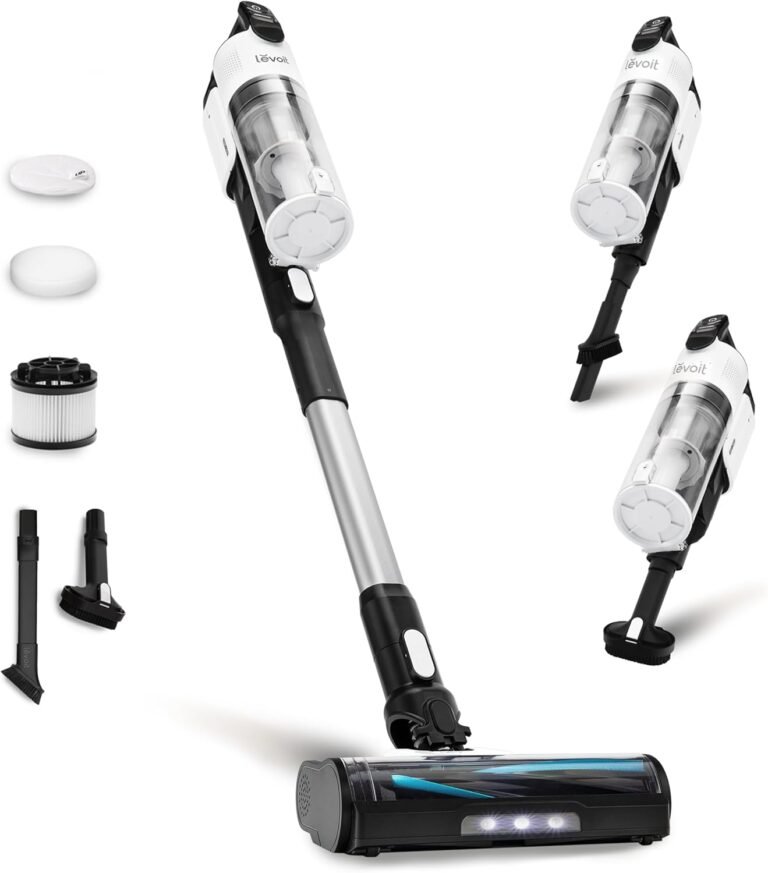
LEVOIT LVAC-200 Cordless Vacuum Cleaner Review: Tangle-Resistant, Powerful, and Versatile for 2026
LEVOIT LVAC-200 cordless vacuum offers tangle-resistant design, 5-stage filtration, and versatile cleaning for carpets, hard floors, and pet hair. Ideal for households…
-
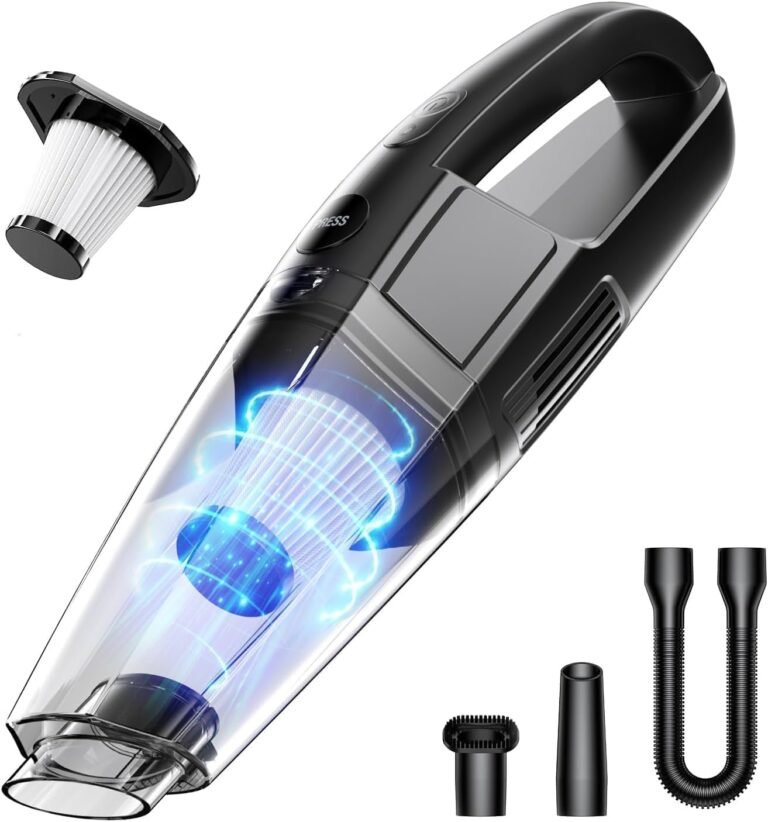
Handheld Vacuum Cordless Review: 8000Pa Suction for Efficient Cleaning
Evaluate the cordless handheld vacuum’s 8000Pa suction, HEPA filter, and multi-accessory design for effective cleaning of pet hair, cars, and homes.