
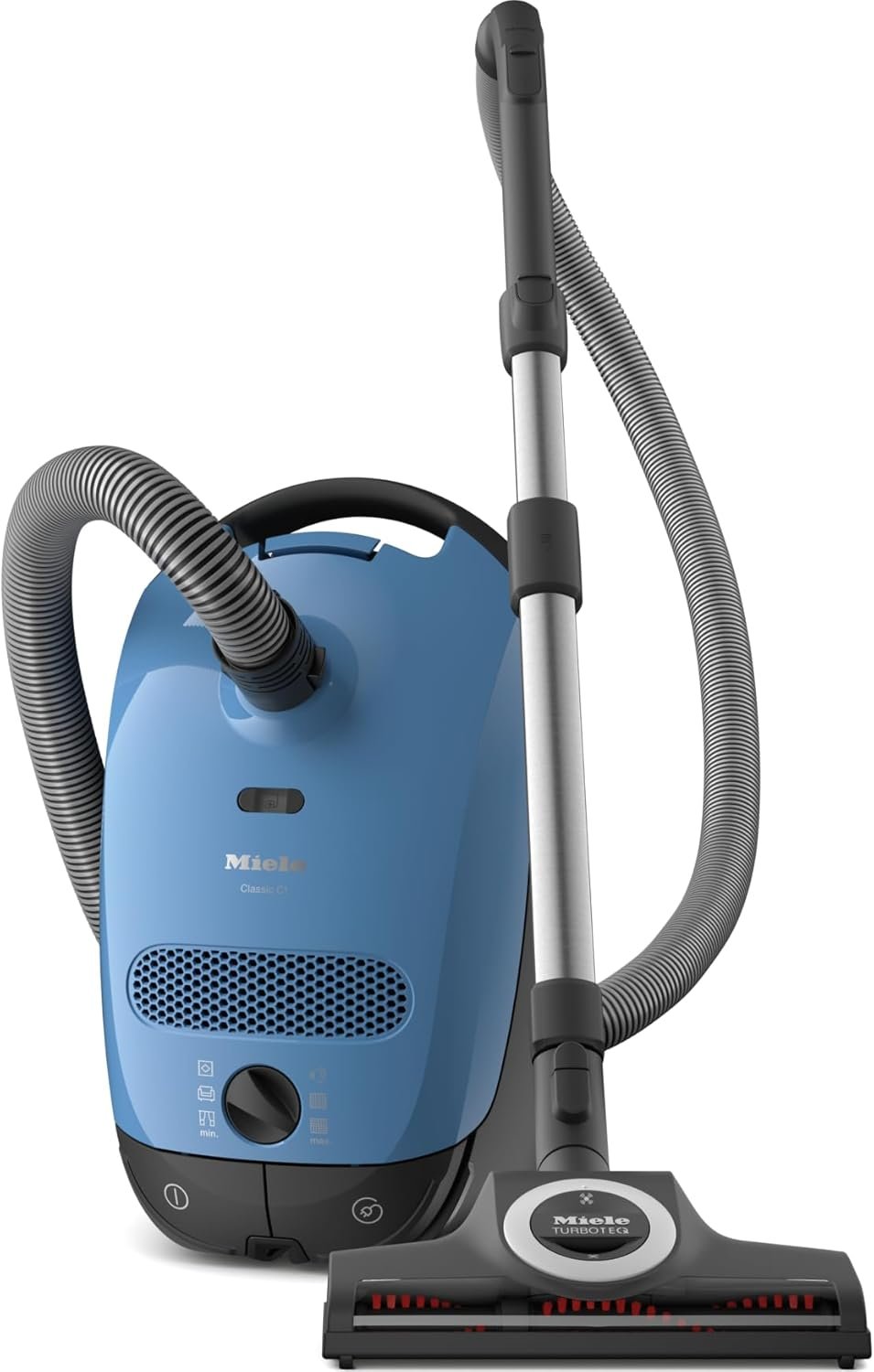
The Miele Classic C1 Turbo Team Bagged Canister Vacuum: A Comprehensive Evaluation
In the realm of household cleaning, the vacuum cleaner stands as a critical tool for maintaining hygiene and aesthetics. As of 2026, the diversity of floor types in modern homes—from high-traffic hardwoods to plush carpets—demands versatile cleaning solutions. The Miele Classic C1 Turbo Team Bagged Canister Vacuum, with its German-engineered design and multi-surface compatibility, represents a compelling option for homeowners seeking balance between performance and practicality. This review explores its strengths and limitations, offering insights into how its features align with the needs of different living environments. Whether you’re navigating the challenges of pet hair on tile or the stubborn residue on low-pile carpets, understanding the vacuum’s specifications and user experiences can guide your decision-making process. By examining its filtration system, suction capabilities, and maneuverability, we aim to provide a data-driven assessment that reflects the realities of modern floor care.
Quick Overview
| Feature | Details |
|---|---|
| Vacuum Type | Bagged canister vacuum cleaner |
| Power Source | Corded electric |
| Filtration System | 3-tiered Miele AirClean System |
| Brush Design | TurboTeQ Floorhead with adjustable height |
| Floor Compatibility | Hard floors, low-medium pile carpets, upholstery |
| Intended Use | Household cleaning in mixed flooring environments |
| Accessories | Dusting brush, crevice tool, upholstery tool |
The Miele Classic C1 Turbo Team’s design prioritizes efficiency across multiple floor types. Its bagged canister system is particularly suited for homes with a mix of hard surfaces and light carpeting, while the adjustable TurboTeQ floorhead ensures adaptability. The 3-tiered filtration system, which includes a Motor Protection Filter and AirClean Exhaust Filter, addresses the need for allergen containment in households with sensitive individuals. These features collectively position the vacuum as a practical choice for everyday cleaning tasks, though its limitations in handling heavy-duty carpeting or high-pile materials should be considered.

Floor Type Compatibility: Adapting to Mixed Environments
The Miele Classic C1 Turbo Team is engineered to navigate the complexities of mixed flooring, a common challenge in contemporary homes. Its bagged canister design is particularly effective on hard floors, where the vacuum’s suction power can efficiently lift dust and debris without the risk of clogging. For low-medium pile carpets, the vacuum’s adjustable TurboTeQ floorhead allows users to optimize the brush bar’s height, ensuring thorough cleaning without damaging the carpet fibers. However, its performance on high-pile or heavily soiled carpets may fall short, as the absence of a dedicated motorized brush head limits its ability to agitate deep-seated dirt.

Hard Floors and Tile: Precision Cleaning
On hard surfaces such as tile, hardwood, or laminate, the Miele Classic C1 Turbo Team excels. The vacuum’s suction settings can be adjusted to match the surface’s requirements, allowing for a controlled yet effective cleaning process. The included SBB Parquet-3 Floorhead is specifically designed for smooth surfaces, ensuring that fine particles are captured without leaving behind residue. This adaptability makes it ideal for homes where hard floors dominate, though its effectiveness on textured or porous tiles may vary depending on the surface’s condition.
Low-Medium Pile Carpets: Balancing Power and Care
For low-medium pile carpets, the vacuum’s suction power provides sufficient lift to remove dust and pet hair without overworking the fibers. The adjustable TurboTeQ floorhead allows users to fine-tune the brush bar’s engagement, ensuring that the vacuum doesn’t push debris deeper into the carpet. However, its performance on heavily soiled or high-pile carpets may be limited, as the absence of a motorized brush head reduces its ability to agitate and lift embedded dirt. This makes it best suited for regular maintenance rather than deep cleaning.
Upholstery and Hard-to-Reach Areas: Accessibility and Versatility
The vacuum’s maneuverability is a standout feature, particularly when cleaning upholstery and tight spaces. The included dusting brush and crevice tool allow for precise cleaning of furniture, curtains, and other hard-to-reach areas. The compact canister design also facilitates easy navigation around furniture legs and under appliances, reducing the need for frequent repositioning. However, its bagged system may require more frequent emptying compared to bagless models, which could be a drawback for users with large households.
Suction Performance: Power Meets Precision
Suction strength is a primary consideration for vacuum effectiveness, and the Miele Classic C1 Turbo Team offers six adjustable suction settings tailored to different surfaces. This level of customization allows users to optimize performance based on the task at hand, ensuring that each cleaning session is both efficient and thorough. The vacuum’s suction power is particularly well-suited for light to moderate cleaning tasks, such as daily dusting or removing surface-level debris. However, its performance on heavily soiled or thick carpets may be limited, as the suction intensity is not as robust as some high-end models.

Adjustable Suction: Tailoring to Surface Needs
The vacuum’s six suction power settings provide a practical solution for matching the cleaning effort to the surface type. For hard floors, a lower suction setting prevents over-suctioning, which could damage delicate surfaces. Conversely, a higher setting is beneficial for low-medium pile carpets, where more force is required to lift embedded dirt. This adaptability ensures that the vacuum can be used effectively across a range of environments, though the lack of a dedicated high-power mode may be a limitation for users with heavy cleaning demands.
Airflow and Filtration: Balancing Efficiency and Cleanliness
While the Miele Classic C1 Turbo Team’s suction power is adequate for routine cleaning, its airflow dynamics are designed to prioritize filtration efficiency over raw power. The vacuum’s 3-tiered filtration system, which includes a Motor Protection Filter and AirClean Exhaust Filter, ensures that the air expelled back into the room is cleaner than when it was drawn in. This is particularly beneficial for households with pets or individuals with allergies, as it minimizes the recirculation of dust and allergens. However, the filtration system’s efficiency comes at the cost of slightly reduced suction compared to models with fewer filtration stages.
Noise Levels: A Consideration for Sensitive Environments
The vacuum’s noise output is a factor that may influence its suitability for certain households. While it is not the quietest model available, its noise levels are within the industry standard for canister vacuums. The vacuum’s design incorporates sound-dampening elements to reduce operational noise, making it more tolerable for use in open spaces or during early mornings. However, users in noise-sensitive environments may find the vacuum’s sound level disruptive, particularly when cleaning large areas with high suction settings.
Filtration System: Ensuring Clean Air and Allergen Control
The Miele Classic C1 Turbo Team’s filtration system is a key differentiator, offering a three-tiered approach to air purification. The first stage, the Motor Protection Filter, prevents large particles from entering the motor, extending the vacuum’s lifespan. The second stage, the genuine Miele FilterBag, captures finer dust and allergens, while the third stage, the AirClean Exhaust Filter, ensures that the air expelled back into the room is free from contaminants. This multi-stage filtration system is particularly advantageous for households with pets or individuals with respiratory sensitivities, as it minimizes the risk of airborne allergens.

Motor Protection Filter: Extending Longevity
The Motor Protection Filter is the first line of defense against particulate matter, preventing large debris from reaching the vacuum’s motor. This not only enhances the vacuum’s durability but also reduces the risk of mechanical failure over time. By capturing coarse particles, the filter helps maintain optimal motor performance, which is crucial for the vacuum’s long-term efficiency. However, the filter’s effectiveness is limited to larger particles, and regular replacement is necessary to maintain its protective function.
FilterBag: Capturing Fine Particles
The genuine Miele FilterBag is designed to capture finer dust and allergens, ensuring that the vacuum’s suction power is not compromised by clogging. This is particularly important for users with allergies or respiratory conditions, as it reduces the amount of airborne particles that could exacerbate symptoms. The FilterBag’s design allows for easy replacement, though the process may require some effort compared to self-emptying models. Its effectiveness in capturing fine particles is a significant advantage, though its capacity may be less than that of high-efficiency particulate air (HEPA) filters found in some premium models.
AirClean Exhaust Filter: Final Air Purification
The AirClean Exhaust Filter is the final stage in the vacuum’s filtration process, ensuring that the air expelled back into the room is as clean as possible. This filter is particularly beneficial for households where air quality is a concern, as it minimizes the recirculation of dust and allergens. The filter’s design allows for efficient airflow while maintaining its cleaning properties, though its maintenance requirements may be higher compared to simpler filtration systems. This final stage is a key feature for users prioritizing indoor air quality.
Maneuverability and Design: Navigating Tight Spaces
The Miele Classic C1 Turbo Team’s maneuverability is a standout feature, particularly for users who need to clean around furniture, under appliances, and in tight corners. Its compact canister design allows for easy navigation, reducing the need for frequent repositioning. The vacuum’s lightweight build, combined with its balanced weight distribution, enhances user comfort during extended cleaning sessions. However, its bagged system may require more frequent emptying compared to bagless models, which could be a drawback for users with large households or high cleaning demands.

Compact Design: Enhancing Accessibility
The vacuum’s compact canister design is well-suited for navigating tight spaces and around furniture legs. Its lightweight construction, while not as ergonomic as some competitors, provides a manageable weight for daily use. The vacuum’s ability to maneuver under appliances and around obstacles makes it ideal for homes with cluttered layouts. However, its size may make it less suitable for users who require a more robust or heavier-duty vacuum for large cleaning tasks.
Accessories: Expanding Cleaning Capabilities
The included accessories—such as the dusting brush, crevice tool, and upholstery tool—enhance the vacuum’s versatility for cleaning a variety of surfaces. The dusting brush is particularly useful for cleaning delicate fabrics and upholstery, while the crevice tool allows for precise cleaning of tight spaces. These accessories, combined with the vacuum’s adjustable floorhead, make it a practical choice for households with diverse cleaning needs. However, the absence of specialized tools for high-pile carpets may limit its effectiveness in certain scenarios.
Weight and Balance: A Factor in User Experience
The Miele Classic C1 Turbo Team’s weight distribution is designed to provide a balanced feel during operation, reducing strain on the user’s arms and back. While it is not the lightest model available, its weight is manageable for most users, particularly when cleaning hard floors or low-pile carpets. The vacuum’s ergonomic design, combined with its maneuverability, makes it a practical choice for everyday cleaning tasks. However, users with mobility challenges or those requiring more ergonomic support may find it less suitable compared to models with advanced ergonomic features.

Pros & Cons
Pros
- Versatile Floor Compatibility: The vacuum excels on hard floors and low-medium pile carpets, making it suitable for mixed flooring environments.
- Three-Tiered Filtration System: The Motor Protection Filter, genuine Miele FilterBag, and AirClean Exhaust Filter work together to minimize allergen recirculation.
- Adjustable Suction Settings: Six suction power levels allow users to tailor performance to different surface types, optimizing efficiency.
- Compact and Maneuverable Design: The lightweight canister and balanced weight distribution make it easy to navigate around furniture and tight spaces.
- Included Accessories: The dusting brush, crevice tool, and upholstery tool expand cleaning capabilities for various surfaces.
- Durable Construction: The vacuum’s design suggests long-term reliability, with components engineered for consistent performance.
Cons
- Limited Heavy-Duty Cleaning: The absence of a motorized brush head may reduce effectiveness on high-pile or heavily soiled carpets.
- Frequent Bag Emptying: The bagged system requires regular emptying, which may be inconvenient for users with large households.
- Moderate Suction Power: While sufficient for routine cleaning, the suction may fall short for deep-cleaning tasks or thick carpets.
- Noise Levels: The vacuum’s noise output is within industry standards but may be disruptive in noise-sensitive environments.
- Higher Maintenance Requirements: The three-tiered filtration system and bagged design necessitate more frequent maintenance compared to simpler models.
Final Verdict: Who This Vacuum Is Best For (and Who Should Skip It)
The Miele Classic C1 Turbo Team Bagged Canister Vacuum is best suited for households with a mix of hard floors and low-medium pile carpets. Its three-tiered filtration system and adjustable suction settings make it an excellent choice for users prioritizing allergen containment and versatility. The vacuum’s compact design and maneuverability also make it ideal for navigating tight spaces and cleaning around furniture. However, it may not be the best option for users requiring heavy-duty cleaning on high-pile carpets or those who prefer a bagless system for convenience. For those seeking a reliable, all-around canister vacuum that balances performance with practicality, the Miele Classic C1 Turbo Team remains a strong contender, particularly in 2026.

Frequently Asked Questions (FAQs)
Is the Miele Classic C1 Turbo Team suitable for cleaning high-pile carpets?
The Miele Classic C1 Turbo Team is designed for low-medium pile carpets, offering sufficient suction to lift surface-level dirt. However, its lack of a motorized brush head limits its effectiveness on high-pile or heavily soiled carpets. For deep cleaning, a vacuum with a dedicated motorized brush is recommended.
How does the three-tiered filtration system work on the Miele Classic C1 Turbo Team?
The vacuum’s filtration system includes a Motor Protection Filter to prevent large particles from damaging the motor, a genuine Miele FilterBag to capture finer dust and allergens, and an AirClean Exhaust Filter to ensure expelled air is cleaner than when it was drawn in. This multi-stage approach minimizes allergen recirculation.
Can the Miele Classic C1 Turbo Team handle pet hair on hard floors?
Yes, the vacuum’s adjustable suction settings and TurboTeQ floorhead are effective at capturing pet hair on hard floors. The included SBB Parquet-3 Floorhead is specifically designed for smooth surfaces, ensuring thorough cleaning without damaging delicate finishes.
How often should the vacuum bag be emptied?
The frequency of bag emptying depends on usage, but the vacuum’s bagged system requires regular emptying to maintain optimal suction performance. Users with large households or high cleaning demands may need to empty the bag more frequently compared to bagless models.
Is the Miele Classic C1 Turbo Team quiet compared to other canister vacuums?
The vacuum’s noise levels are within the industry standard for canister vacuums, making it more tolerable for use in open spaces. However, it is not the quietest model available, and users in noise-sensitive environments may find the sound level disruptive during extended use.
What are the key differences between the Miele Classic C1 Turbo Team and a bagless canister vacuum?
The Miele Classic C1 Turbo Team uses a bagged system, which requires regular emptying but offers a more contained method of dust extraction. Bagless models, on the other hand, typically have self-emptying capabilities but may require more frequent filter maintenance. The choice between the two depends on user preferences for convenience and cleaning efficiency.
Can the Miele Classic C1 Turbo Team clean upholstery effectively?
Yes, the vacuum’s maneuverability and included accessories, such as the dusting brush and upholstery tool, make it suitable for cleaning upholstery. The adjustable floorhead also allows for precise cleaning of fabric surfaces without damaging delicate materials.
What are the limitations of the Miele Classic C1 Turbo Team’s suction power?
The vacuum’s suction power is adequate for routine cleaning tasks, particularly on hard floors and low-medium pile carpets. However, it may fall short for deep-cleaning heavy-duty carpets or large areas with high debris loads, where a more powerful model would be more effective.