
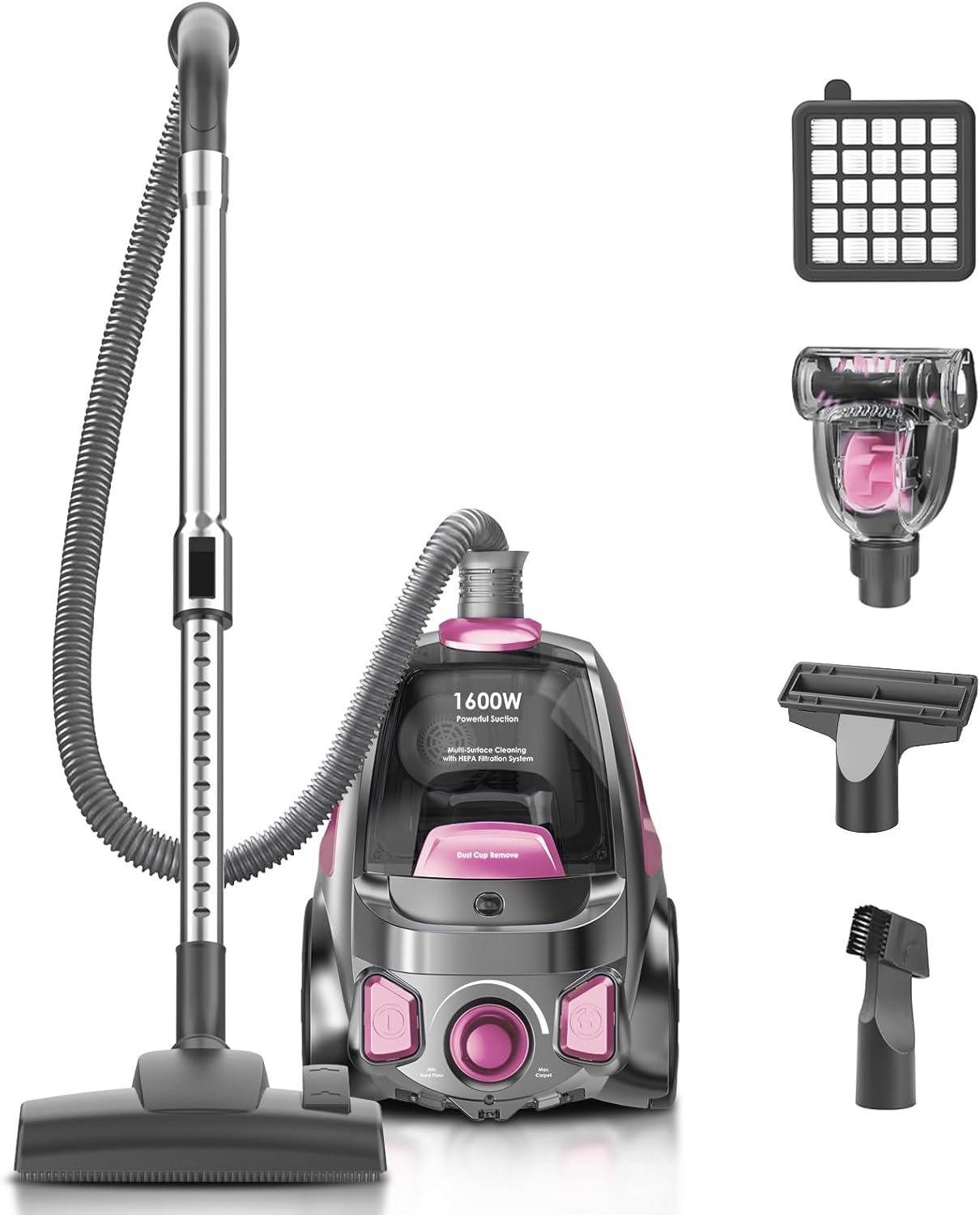
The Importance of Choosing the Right Vacuum Cleaner
Selecting an appropriate vacuum cleaner is critical for maintaining a clean and hygienic home environment. Modern households face diverse cleaning challenges, from removing stubborn pet hair on hardwood floors to extracting deep-seated dirt from thick carpets. The effectiveness of a vacuum cleaner depends on its ability to address these specific needs while balancing performance, efficiency, and user convenience. Floor type compatibility, suction power, filtration quality, and maneuverability are key factors that influence cleaning outcomes. For example, hard floors require a vacuum with strong suction and dust containment to prevent fine particles from becoming airborne, while carpets demand a brush roll design capable of lifting embedded debris. Pet owners often prioritize vacuums with specialized tools to manage hair and dander, while families with allergies benefit from advanced filtration systems. Understanding these requirements helps consumers identify vacuums that align with their cleaning goals and home environments. A vacuum that excels in one area but fails in another may lead to suboptimal results, underscoring the importance of a holistic evaluation of product features. This review examines the PKUYIE SL159 canister vacuum cleaner, focusing on its performance across key cleaning criteria and its suitability for various household needs.
Quick Overview
| Feature | Details |
|---|---|
| Vacuum Type | Canister vacuum cleaner |
| Power Source | Corded electric |
| Filtration System | Dual H13 HEPA filters |
| Brush Design | Cyclonic suction with brush roll |
| Weight | 13.22 pounds |
| Form Factor | Canister design |
| Floor Compatibility | Hard floors, carpets, pet hair |
| Intended Use | Home cleaning, upholstery, furniture |
| Noise Level | 68 decibels |
The PKUYIE SL159 combines cyclonic suction with HEPA filtration to deliver robust cleaning performance. Its canister design allows for flexible maneuvering, while the dual filtration system ensures minimal particulate release. The vacuum’s weight and noise level make it suitable for households seeking balance between efficiency and quiet operation. These features collectively address common cleaning challenges, making it a viable option for a range of floor types and debris types.

Suction Power and Cleaning Efficiency
The SL159’s 40KPa suction power is a key factor in its ability to tackle deep cleaning tasks. Cyclonic suction technology enhances airflow by using centrifugal force to separate dust and debris from the air, maintaining consistent suction throughout the cleaning cycle. This design is particularly effective for removing fine particles from hard floors and lifting embedded dirt from carpets. The 1600W brushless motor contributes to sustained performance, reducing the risk of overheating and extending the vacuum’s lifespan. For households with thick carpets or high-traffic areas, the suction power ensures thorough extraction of debris without the need for frequent emptying. However, the vacuum’s suction efficiency may be slightly limited on extremely dense or high-pile carpets, where additional brushing may be required. The cyclonic system also helps prevent clogging, maintaining suction levels even after extended use.

Floor Type Compatibility
The SL159 is designed to handle a variety of floor types, including hardwood, tile, and low-pile carpets. Its cyclonic suction and adjustable brush roll make it suitable for both hard floors and medium-density carpets. For pet owners, the vacuum’s ability to capture fine hair and dander is particularly valuable, as the dual HEPA filtration system minimizes airborne particles. However, the vacuum may struggle with very thick or high-pile carpets, where the brush roll might not reach the deepest layers of debris. The inclusion of a pet tool and upholstery attachment enhances its versatility for different surfaces, making it a practical choice for households with mixed flooring.
Debris Removal and Cleaning Efficiency
The vacuum’s cyclonic suction system ensures efficient debris removal by separating dust and dirt from the air stream. This reduces the frequency of emptying the dust cup and maintains consistent suction power over time. The 3.7-quart dust cup provides ample capacity for regular cleaning sessions, though users with large homes may need to empty it more frequently. The vacuum’s brush roll is effective for loosening embedded dirt on carpets, but its performance may be limited on very dense or heavily soiled surfaces. The HEPA filtration system ensures that the air released is clean, making it suitable for households with allergy sufferers or those prioritizing indoor air quality.
Filtration Quality and Air Quality Management
The dual H13 HEPA filtration system is a standout feature of the SL159, capturing 99.97% of fine dust and allergens. This level of filtration is essential for households with pets or individuals with respiratory sensitivities, as it minimizes the recirculation of airborne particles. The HEPA filters are washable and reusable, reducing long-term maintenance costs compared to disposable filters. However, the effectiveness of the filtration system depends on regular cleaning and replacement of the filters, as clogged filters can reduce suction power and compromise air quality. The vacuum’s design ensures that the filtration system remains intact during use, preventing dust from escaping into the environment. For users prioritizing indoor air quality, the HEPA filters provide a significant advantage, though they may require more attention to maintenance than some competitors.

Allergen Containment and Indoor Air Quality
The SL159’s HEPA filtration system is particularly beneficial for households with allergies or asthma sufferers, as it significantly reduces the presence of airborne allergens. The dual filtration system ensures that even the smallest particles are captured, preventing them from being redistributed during cleaning. This feature is especially valuable in homes where pets or dust mites are common, as it helps maintain a cleaner indoor environment. The vacuum’s closed-loop design further enhances air quality by containing dust within the system, reducing the risk of cross-contamination. While the HEPA filters are effective, users should be aware that they may require more frequent cleaning compared to some disposable filter systems, which could impact long-term convenience.
Maintenance and Filter Replacement
The washable HEPA filters in the SL159 offer a cost-effective solution for maintaining air quality, but they require regular cleaning to remain efficient. Users should follow the manufacturer’s guidelines for filter maintenance, which typically involve rinsing the filters with water and allowing them to dry completely before reinstallation. The vacuum’s design ensures that the filtration system remains intact during use, but neglecting filter maintenance can lead to reduced suction power and compromised air quality. The vacuum’s large dust cup also contributes to its efficiency, as it minimizes the need for frequent emptying and reduces the risk of clogging. However, users with high cleaning demands may find the maintenance requirements more burdensome compared to models with disposable filters.
Maneuverability and User Experience
The SL159’s lightweight design and flexible steering system enhance its maneuverability, making it easier to navigate around furniture and tight spaces. The canister design allows for a compact profile, which is advantageous for cleaning under low furniture or in corners. The vacuum’s noise level of 68 decibels is relatively quiet for a canister model, making it suitable for use in open spaces or during early mornings. However, the vacuum’s weight may make it less comfortable for extended use, particularly for users with mobility limitations. The inclusion of specialized attachments, such as the pet tool and upholstery brush, expands its versatility for different cleaning tasks. While the vacuum’s design prioritizes ease of use, its performance on very thick carpets may require additional effort, which could affect user satisfaction in certain scenarios.

Weight and Handling
Weighing 13.22 pounds, the SL159 is relatively lightweight for a canister vacuum, which contributes to its ease of handling. This weight is manageable for most users, though individuals with limited strength may find it slightly challenging for prolonged use. The vacuum’s flexible steering system allows for smooth navigation, reducing strain on the user’s arms and shoulders. The canister design also provides a stable base, minimizing tipping during use. However, the vacuum’s weight may make it less ideal for users who require a lighter model for frequent, extended cleaning sessions. The balance between weight and maneuverability is a key consideration for households with specific mobility needs.
Noise Level and Quiet Operation
Operating at 68 decibels, the SL159 is relatively quiet for a canister vacuum, which is beneficial for households that prefer a less disruptive cleaning experience. This noise level is comparable to a low-volume conversation, making it suitable for use in open areas or during early mornings. The vacuum’s noise management is particularly advantageous for users who need to clean without disturbing others, such as in multi-family homes or shared living spaces. However, the vacuum may still produce noticeable noise in quiet environments, such as bedrooms or offices. The noise level is a trade-off between performance and user comfort, with the SL15,9’s design prioritizing a balance between efficiency and quiet operation.

Pros and Cons
Pros
- Robust Suction Power: The 40KPa suction and 1600W motor provide strong cleaning performance for a wide range of floor types, including carpets and hard floors.
- Dual HEPA Filtration: The H13 filters capture 99.97% of fine dust and allergens, improving indoor air quality and reducing airborne particles.
- Large Dust Capacity: The 3.7-quart dust cup reduces the frequency of emptying, enhancing cleaning efficiency for regular use.
- Versatile Attachments: The included pet tool, upholstery brush, and floor nozzle expand the vacuum’s ability to handle different cleaning tasks.
- Lightweight Design: The 13.22-pound weight makes it manageable for most users, though it may still be challenging for extended use.
- Quiet Operation: The 68 decibel noise level is relatively quiet, suitable for use in shared spaces or early mornings.
- Corded Power Source: The corded design ensures consistent power delivery without battery limitations.
- Washable Filters: The reusable HEPA filters reduce long-term maintenance costs compared to disposable alternatives.
Cons
- Limited Performance on Thick Carpets: The vacuum may struggle with very dense or high-pile carpets, requiring additional brushing for thorough cleaning.
- Maintenance Requirements: The washable HEPA filters require regular cleaning to maintain efficiency, which may be time-consuming for some users.
- Weight Consideration: While lightweight for a canister model, the 13.22-pound weight may be challenging for users with mobility limitations.
- Dust Cup Capacity: The 3.7-quart capacity is adequate for regular use but may require more frequent emptying in large homes.
- Noise Level: The 68 decibel noise level is relatively quiet but may still be noticeable in quiet environments.
Final Verdict: Who This Vacuum Is Best For (and Who Should Skip It)
The PKUYIE SL159 canister vacuum cleaner is best suited for households with mixed flooring types, including hard floors, low-pile carpets, and upholstery. Its dual HEPA filtration system and strong suction power make it an excellent choice for families with pets or individuals with allergies, as it effectively captures fine particles and dander. The vacuum’s lightweight design and maneuverability enhance its usability in tight spaces, making it ideal for homes with limited storage or mobility challenges. However, users with very thick carpets or high-pile flooring may find the vacuum less effective, as it may require additional brushing to remove deeply embedded dirt. The SL159 is also well-suited for those who prioritize indoor air quality and prefer a vacuum with washable filters over disposable alternatives. Conversely, individuals seeking a lighter, cordless model or a vacuum with advanced smart features may find the SL159 less appealing. Overall, the SL159 offers a balanced combination of performance, efficiency, and user-friendly design, making it a practical choice for a wide range of cleaning needs.

Frequently Asked Questions (FAQs)
How effective is the dual HEPA filtration system in capturing allergens?
The dual H13 HEPA filtration system captures 99.97% of fine dust and allergens, making it highly effective for reducing airborne particles. This system is particularly beneficial for households with pets or allergy sufferers, as it minimizes the recirculation of dust and dander.
Can this vacuum handle thick or high-pile carpets?
The SL159 performs well on low-pile carpets and hard floors, but it may struggle with very thick or high-pile carpets. For optimal results, users may need to combine it with additional brushing or use a vacuum specifically designed for heavy-duty carpet cleaning.
How often should I clean the HEPA filters?
The washable HEPA filters should be cleaned regularly according to the manufacturer’s guidelines. Typically, this involves rinsing the filters with water and allowing them to dry completely. Regular maintenance ensures the filtration system remains efficient and effective.
What is the noise level of this vacuum cleaner?
The SL159 operates at 68 decibels, which is relatively quiet for a canister vacuum. This noise level is suitable for use in shared spaces or early mornings, though it may still be noticeable in very quiet environments.
Is the vacuum suitable for large homes?
The 3.7-quart dust cup provides adequate capacity for regular cleaning, but users with large homes may need to empty it more frequently. The vacuum’s suction power and efficiency make it suitable for moderate to large spaces, though it may require more frequent maintenance for high-traffic areas.
Can this vacuum clean upholstery and furniture?
Yes, the SL159 includes specialized attachments such as the upholstery tool and pet tool, making it effective for cleaning upholstery, curtains, and other fabric surfaces. These attachments allow for thorough cleaning of delicate and textured materials.
What is the weight of the vacuum cleaner?
The SL159 weighs 13.22 pounds, which is relatively lightweight for a canister model. This weight makes it manageable for most users, though individuals with mobility limitations may find it slightly challenging for extended use.
How does the cyclonic suction system work?
The cyclonic suction system uses centrifugal force to separate dust and debris from the air, maintaining consistent suction power throughout the cleaning cycle. This design reduces the frequency of emptying the dust cup and ensures efficient debris removal from various floor types.