The Importance of Choosing the Right Vacuum Cleaner
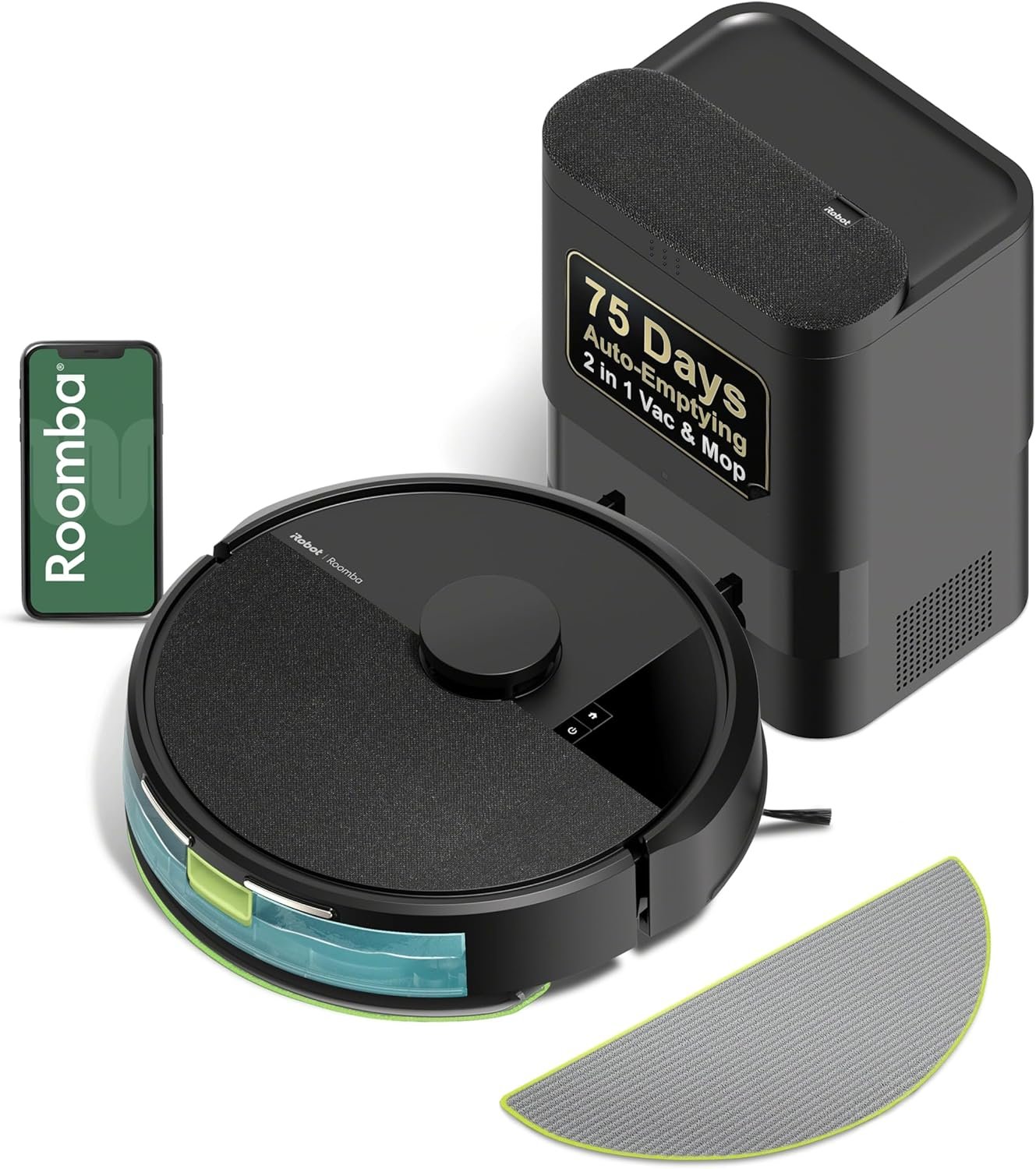
Selecting the optimal vacuum cleaner involves balancing performance, efficiency, and compatibility with household needs. Modern homes often feature mixed flooring—carpet, hardwood, tile, and laminate—each requiring distinct cleaning approaches. Pet hair, dust, and debris accumulate in high-traffic areas, while allergens and fine particles demand robust filtration. A vacuum must navigate tight corners, avoid obstacles, and clean effectively without excessive noise. For households with multiple pets or frequent spills, a dual-function vacuum-mop system can streamline maintenance. The iRobot Roomba 104 addresses these challenges with its self-emptying dock, LiDAR navigation, and multi-surface cleaning capabilities. Its design prioritizes user convenience while maintaining performance on various floor types. Understanding how these features align with specific cleaning needs helps consumers determine if this model suits their home environment.
Quick Overview
| Feature | Details |
|---|---|
| Vacuum Type | Robotic vacuum-mop combo |
| Power Source | Battery-powered |
| Filtration System | 99% allergen trap with 0.7-micron efficiency |
| Brush Design | Multi-surface brush, edge-sweeping brush |
| Weight and Form Factor | 14.92 pounds, round design |
| Floor Compatibility | Hard floors, carpets (with mopping avoidance) |
| Intended Use | Daily cleaning, pet hair removal, spill cleanup |
| Warranty | Manufacturer’s standard warranty |
The Roomba 104 combines vacuuming and mopping in a single unit, designed for households with mixed flooring. Its self-emptying dock minimizes manual intervention, while LiDAR navigation ensures efficient coverage. The filtration system traps allergens, making it suitable for allergy-sensitive environments. The round form factor and weight balance usability with stability on different surfaces. These features collectively address common cleaning challenges, offering a streamlined solution for daily maintenance.

Floor Type Compatibility and Multi-Surface Cleaning
The Roomba 104 is engineered to handle both hard floors and carpets, though its performance varies depending on the surface type. On hard floors such as tile, hardwood, and laminate, the vacuum-mop system excels at removing dust, dirt, and liquid spills. The multi-surface brush and microfiber mop pad work in tandem to lift debris and absorb moisture, ensuring a thorough clean. For carpets, the robot automatically detects and avoids them during mopping, preventing water damage. However, vacuuming performance on carpets is optimized for low-pile varieties, with less effectiveness on thick or high-pile materials. The edge-sweeping brush enhances corner cleaning, making it ideal for homes with pets where hair and dander accumulate near walls and baseboards. This dual-function design caters to households with mixed flooring, reducing the need for separate cleaning tools.

Hard Floor Performance
On hard floors, the Roomba 104 delivers consistent cleaning results by combining suction power with a microfiber mop pad. The multi-surface brush agitates dirt and dust, while the mop pad absorbs liquid spills and excess moisture. The robot’s LiDAR navigation ensures even coverage, avoiding obstacles and optimizing path efficiency. For spills and sticky residues, the adjustable water flow allows users to customize mopping intensity. The vacuum’s suction power is effective for loose debris, though it may struggle with deeply embedded dirt on high-traffic areas. This makes it well-suited for kitchens, bathrooms, and entryways where frequent cleaning is required.
Carpet Cleaning Limitations
While the Roomba 104 can vacuum carpets, its mopping function is designed to avoid carpets entirely. The robot’s sensors detect carpeted surfaces and switch to vacuum-only mode, preventing water damage. Vacuuming performance on carpets is optimized for low-pile varieties, where the multi-surface brush can effectively agitate and extract dirt. However, thick or high-pile carpets may require additional manual cleaning, as the vacuum’s suction may not fully penetrate dense fibers. This limitation makes the Roomba 104 less ideal for households with predominantly carpeted spaces, though it remains a practical option for spot cleaning and maintenance.
Suction Strength and Cleaning Efficiency
The Roomba 104’s suction power is a key factor in its cleaning performance, though its effectiveness depends on floor type and debris type. The vacuum features 70X more intense power-lifting suction compared to certain older models, which helps lift pet hair, dust, and fine particles from hard floors. This suction is particularly useful for removing embedded dirt and debris from high-traffic areas. However, on carpets, the suction is less aggressive, and the vacuum’s primary function shifts to agitating and extracting loose dirt. The edge-sweeping brush complements the suction by cleaning corners and tight spaces, making it effective for pet hair accumulation near walls. For users with multiple pets, this feature ensures thorough cleaning of high-traffic zones. The suction efficiency is also influenced by the robot’s path planning, which ensures even coverage without overlapping or missed spots.

Debris Type and Suction Limitations
The Roomba 104 excels at removing loose debris, pet hair, and fine particles from hard floors, thanks to its enhanced suction power. However, it may struggle with larger, heavier debris such as food particles or large clumps of dirt. The vacuum’s suction is optimized for small particles, making it less effective for deeply embedded or stubborn messes. The multi-surface brush helps agitate dirt, but its performance is limited by the robot’s ability to navigate tight spaces. For households with frequent spills or heavy debris buildup, the Roomba 104 may require additional manual cleaning to achieve optimal results. This limitation is less critical for users with regular maintenance routines but may be a consideration for those with specific cleaning needs.
Filtration Quality and Allergen Containment
The Roomba 104’s filtration system is designed to trap allergens and fine particles, making it suitable for allergy-sensitive households. The vacuum features a 99% allergen trap capable of capturing particles as small as 0.7 microns, which includes common allergens such as pollen, dust mites, and pet dander. This filtration system reduces airborne particles, improving indoor air quality. The self-emptying dock further enhances allergen containment by minimizing manual handling of debris, as the vacuum automatically discards collected dirt into a bag. However, the filtration system is not HEPA-rated, which means it may not fully capture all microscopic particles. For users with severe allergies or respiratory conditions, this could be a limitation, though the filtration system still provides significant allergen reduction compared to traditional vacuums.

Dust and Allergen Management
The Roomba 104’s filtration system effectively manages dust and allergens by trapping them in the vacuum’s bag, preventing their release into the air. The 0.7-micron filtration efficiency ensures that fine particles, including pet dander and pollen, are contained within the system. The self-emptying dock reduces the need for frequent manual cleaning, which can help minimize dust dispersion during disposal. However, the absence of a HEPA filter means that some microscopic particles may still escape, particularly if the vacuum is used in high-dust environments. For households with multiple pets or frequent allergen exposure, this limitation may require additional measures such as regular filter maintenance or supplementary air purifiers to ensure optimal air quality.
Maneuverability and Ease of Use
The Roomba 104’s design prioritizes maneuverability and ease of use, though its performance is influenced by the robot’s weight and form factor. The round body and 14.92-pound weight provide stability on different surfaces, but they also limit the robot’s ability to navigate extremely tight spaces. The LiDAR navigation system ensures smooth movement around obstacles, though it may occasionally misinterpret certain objects as navigable. The vacuum’s ability to avoid stairs and other drop-offs is a key safety feature, though users must ensure that the robot’s sensors have unobstructed access to these areas. The intuitive app interface and voice assistant compatibility simplify scheduling and customization, though some users may find the setup process slightly complex.

Navigation and Obstacle Avoidance
The Roomba 104’s LiDAR navigation system enables precise path planning, allowing the robot to navigate around obstacles such as furniture legs and cords. The system maps the home environment to optimize coverage, though it may occasionally require manual intervention to correct navigation errors. The robot’s ability to avoid stairs and drop-offs is reliable, provided there are no obstructions blocking its sensors. For users with cluttered spaces or irregular floor layouts, the navigation system may need periodic recalibration to maintain efficiency. The robot’s maneuverability is generally adequate for most household environments, though it may struggle with exceptionally tight corners or high-traffic areas with frequent movement.
Noise Expectations and User Experience
The Roomba 104 operates at a noise level that is generally acceptable for most home environments, though it may be louder than some traditional vacuums. The vacuum’s suction power and motor efficiency contribute to its operational noise, which is typically at a moderate level for a robotic cleaner. The mopping function is quieter than the vacuuming mode, as it relies on water flow rather than high-speed suction. While the noise level is not disruptive in most cases, users in quiet environments or those with light sleepers may find the vacuum’s operation slightly intrusive. The robot’s ability to complete cleaning tasks without constant user attention helps mitigate noise concerns, though the sound may be noticeable during extended cleaning sessions.

Noise Management and User Comfort
The Roomba 104’s noise level is a consideration for users in noise-sensitive environments. The vacuum’s suction and motor operation produce a moderate level of sound, which is typical for a robotic cleaner but may be more noticeable than corded or cordless models. The mopping function is quieter, as it relies on water flow rather than high-speed suction. While the noise is not disruptive for most users, those in shared living spaces or with light sleepers may need to schedule cleaning sessions during appropriate times. The robot’s ability to operate independently reduces the need for constant user intervention, though the noise level remains a factor in determining its suitability for specific households.

Pros & Cons
Pros
- Self-Emptying Dock: The 75-day self-emptying dock minimizes manual cleaning, reducing the need to handle debris and allergens.
- LiDAR Navigation: The ClearView LiDAR system ensures efficient coverage and obstacle avoidance, optimizing cleaning paths.
- Multi-Surface Cleaning: The combination of vacuuming and mopping makes it suitable for mixed flooring environments.
- Edge-Sweeping Brush: Enhances corner and edge cleaning, particularly effective for pet hair accumulation.
- Smart App Integration: The Roomba Home app allows for scheduling, customization, and remote control via voice assistants.
- Water Flow Control: Adjustable mopping solution allows users to customize cleaning intensity for different surfaces.
- Allergen Containment: The 99% allergen trap with 0.7-micron filtration reduces airborne particles in the home.
- Battery Life: 120 minutes of runtime ensures sufficient cleaning capacity for most households.
Cons
- Limited Carpet Cleaning: The vacuum’s mopping function avoids carpets entirely, and vacuuming performance is less effective on thick or high-pile carpets.
- No HEPA Filter: The filtration system does not capture all microscopic particles, which may be a concern for allergy-sensitive users.
- Noise Level: The suction and motor operation produce a moderate noise level, which may be intrusive in quiet environments.
- Setup Complexity: Some users may find the initial setup and navigation calibration process slightly complex.
- Weight and Maneuverability: The 14.92-pound weight and round form factor may limit navigation in tight spaces.
- Battery Life Constraints: While 120 minutes is adequate for most tasks, extended cleaning sessions may require multiple charges.
Final Verdict: Who This Vacuum Is Best For (and Who Should Skip It)
The iRobot Roomba 104 is an excellent choice for households with mixed flooring, particularly those with hard floors and low-pile carpets. Its self-emptying dock, LiDAR navigation, and multi-surface cleaning capabilities make it ideal for users who prioritize convenience and efficiency. The vacuum’s allergen containment system is beneficial for allergy-sensitive individuals, though it lacks a HEPA filter for maximum air quality. The edge-sweeping brush and adjustable mopping solution cater to pet owners and households with frequent spills. However, users with predominantly carpeted spaces or those requiring deep cleaning of thick carpets may find the Roomba 104 less effective. Additionally, the noise level and setup complexity may deter users in noise-sensitive environments or those who prefer simpler operation. Overall, the Roomba 104 is a versatile solution for daily cleaning tasks, but its limitations make it less suitable for specific use cases.

Frequently Asked Questions (FAQs)
Can the Roomba 104 clean both carpets and hardwood floors?
The Roomba 104 is designed for mixed flooring, with vacuuming capabilities on low-pile carpets and mopping on hard floors. It automatically avoids carpets during mopping to prevent water damage, but vacuuming performance is less effective on thick or high-pile carpets.
How long does the Roomba 104’s battery last?
The Roomba 104 provides up to 120 minutes of runtime, which is sufficient for most cleaning tasks. However, extended sessions may require multiple charges, especially in large spaces.
Does the Roomba 104 have a HEPA filter?
The Roomba 104 features a 99% allergen trap capable of capturing particles as small as 0.7 microns, but it does not include a HEPA filter. This makes it effective for reducing allergens but not as comprehensive as HEPA-rated systems.
Can the Roomba 104 be controlled via voice assistants?
Yes, the Roomba 104 is compatible with Alexa, Siri, and Google Assistant, allowing users to schedule and initiate cleanings through voice commands.
How does the Roomba 104 handle pet hair?
The Roomba 104 excels at removing pet hair from hard floors thanks to its 70X more intense suction and edge-sweeping brush. However, vacuuming performance on thick carpets may not fully extract pet hair.
Is the Roomba 104 suitable for allergy-sensitive individuals?
The Roomba 104’s 99% allergen trap with 0.7-micron filtration helps reduce airborne particles, making it beneficial for allergy-sensitive households. However, the absence of a HEPA filter means it may not fully capture all microscopic allergens.
Can the Roomba 104 mop multiple rooms?
The Roomba 104 can clean multiple rooms by mapping the home environment and following scheduled cleaning paths. Users can set specific rooms or areas for targeted cleaning through the Roomba Home app.
How often should the Roomba 104’s filters be replaced?
The Roomba 104’s filter is a cartridge type that should be replaced every 6 to 12 months, depending on usage. Regular cleaning of the filter compartment can help maintain suction efficiency and prolong filter life.